Unlocking Liquidity: Spain’s Free Trade Zones for Non-EU Exporters
MercantilLearn how non-EU exporters use Spain’s Free Trade Zones to defer VAT, suspend customs duties, and optimize cash flow when entering the European market.
Por NRRO Editorial Team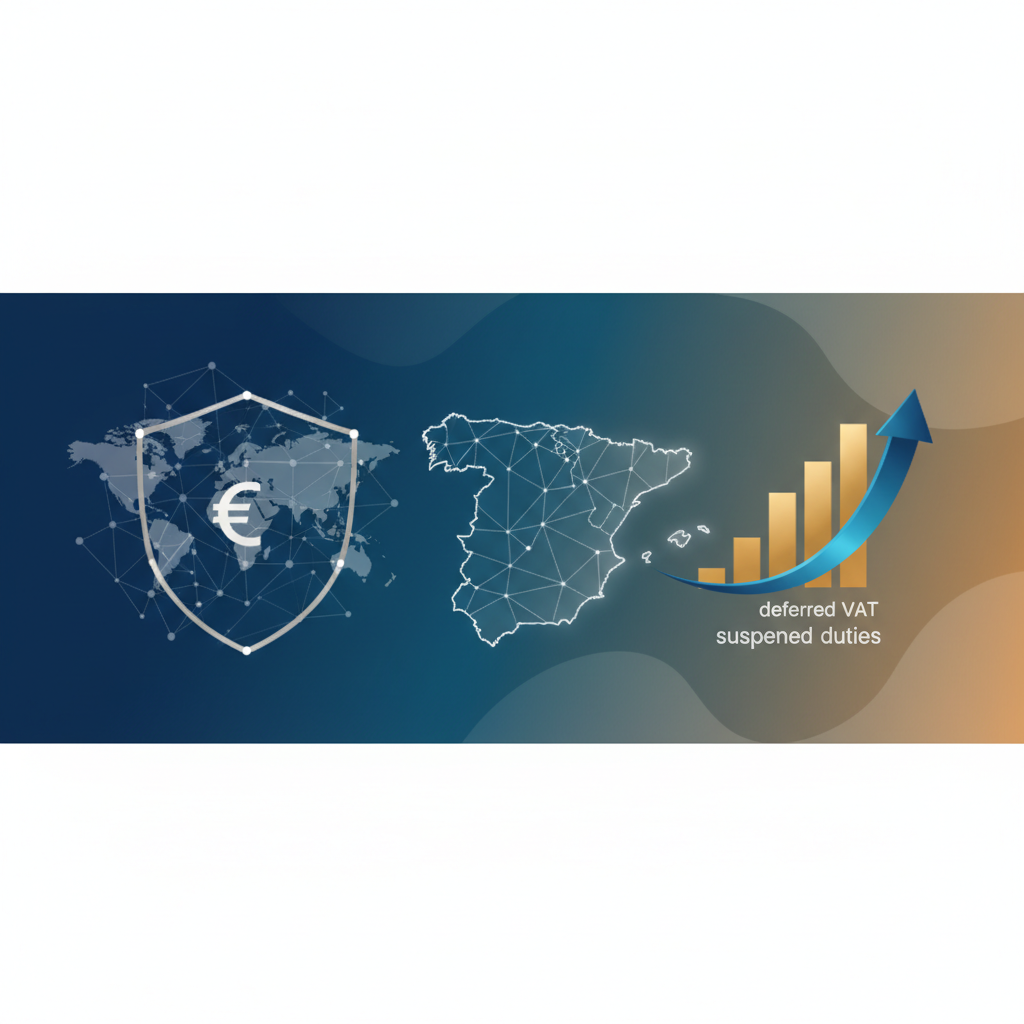
The Strategic Advantage of Spanish Free Trade Zones
For international companies looking to penetrate the European market, Spain offers more than just a Mediterranean lifestyle. It provides a sophisticated legal and logistical framework designed to optimize cash flow and reduce the tax burden on non-EU exporters. Chief among these instruments are the Free Trade Zones (Zonas Francas).
A Free Trade Zone is a restricted area within the customs territory of the European Union where non-Union goods can be introduced without being subject to import duties, VAT, or commercial policy measures. In Spain, these zones are strategically located in key maritime and logistical hubs, including Barcelona, Santander, Vigo, Cádiz, Tenerife, Gran Canaria, and Seville.
In this guide, we will explore how non-EU exporters can leverage these zones to unlock liquidity, defer tax liabilities, and streamline international logistics in Spain.
1. Financial Catalysts: Import VAT and Customs Duty Suspension
The primary financial benefit of operating within a Spanish Free Trade Zone is the suspension of taxes. In a standard import scenario, a non-EU company must pay customs duties and Import VAT (typically 21% in Spain) the moment goods clear customs. This ties up significant capital before a single sale is even made.
Deferring Spanish Import VAT
When goods enter a Zona Franca, the obligation to pay VAT is suspended. This is vital for companies that use Spain as a distribution hub for the rest of Europe or Latin America. If the goods are subsequently re-exported to a country outside the EU, the 21% VAT is never paid. If the goods enter the Spanish market, the VAT is only paid at the moment of exit from the zone, significantly improving the company's liquidity position.
Customs Duty Suspension in Spain
Customs duties can range from 0% to over 15% depending on the product code (HS Code). By utilizing a Free Trade Zone, companies can store inventory indefinitely without paying these duties. This allows businesses to:
- Store buffer stock close to the final consumer without upfront tax costs.
- Perform "usual forms of handling" (such as labeling, packaging, or testing) to prepare goods for the EU market.
- Wait for favorable market conditions or exchange rates before clearing goods for consumption.
2. Real-World Example: An Electronics Exporter
Consider a mobile phone manufacturer from South Korea looking to distribute 10,000 units across Europe using Barcelona as their hub. Each unit is valued at €500.
- Total Inventory Value: €5,000,000
- Standard Import VAT (21%): €1,050,000
- Estimated Customs Duties (approx 2%): €100,000
Without a Free Trade Zone, the company would have to pay €1,150,000 upfront. By using the Free Trade Zone in Barcelona, the company keeps that €1.15 million in their bank account, allowing them to reinvest in marketing or R&D while the goods sit safely in a Spanish warehouse.
3. Key Logistics and Operational Benefits
Efficiency in international logistics in Spain is not just about tax; it is about speed and flexibility. The Free Trade Zones offer:
- Unlimited Storage Duration: Unlike bonded warehouses, which may have time restrictions, goods can remain in a Free Trade Zone indefinitely.
- Simpler Documentation: Foreign companies can often manage inventory using their own commercial documents provided they are approved by the Customs Authorities.
- Strategic Locations: Most Spanish zones are located near major ports (Port of Barcelona, Port of Algeciras), reducing inland transit costs.
4. Step-by-Step Process to Utilize a Spanish Free Trade Zone
Setting up operations within a Spanish Free Trade Zone requires a structured legal approach. Here is the typical timeline and process:
Step 1: Spanish Company Formation (2-4 Weeks)
While some non-resident entities can operate through a fiscal representative, most international firms choose to incorporate a Spanish subsidiary (S.L.) to manage operations. This involves obtaining a NIE for directors and a CIF (Tax ID) for the company.
Step 2: EORI Number Registration (1 Week)
You must obtain an Economic Operator Registration and Identification (EORI) number. This is required for all businesses engaging in customs activities within the EU.
Step 3: Warehouse Agreement (Varies)
Exporters must either lease space directly from the Zona Franca management or partner with a 3PL (Third-Party Logistics) provider already authorized to operate within the zone.
Step 4: Customs Authorization (1-3 Months)
Depending on the complexity of your operations (e.g., if you plan to process goods rather than just store them), you may need specific authorizations from the Spanish Tax Agency (Agencia Tributaria).
5. Costs and Maintenance
Operating in a Free Trade Zone involves specific costs that vary by location:
- Warehousing Fees: Competitive with standard warehouse rates, often ranging from €5 to €15 per square meter, depending on the facilities.
- Customs Brokerage: Charges per declaration (DUA), typically between €50 and €150 per entry/exit.
- Management Fees: Some zones charge a small administrative fee for security and infrastructure maintenance.
Conclusion: A Gateway to Global Growth
Spain’s Free Trade Zones are not merely storage spaces; they are powerful financial instruments that allow non-EU exporters to compete on an equal footing with local European companies. By effectively deferring Spanish import VAT and utilizing customs duty suspension in Spain, businesses can maximize their working capital and scale their European operations with minimal risk.
Ready to optimize your international logistics in Spain? At NRRO International Advisory, we specialize in helping international firms navigate the complexities of Spanish customs law and company formation. Contact our expert team today for a tailored consultation on how to integrate Free Trade Zone benefits into your business model.